


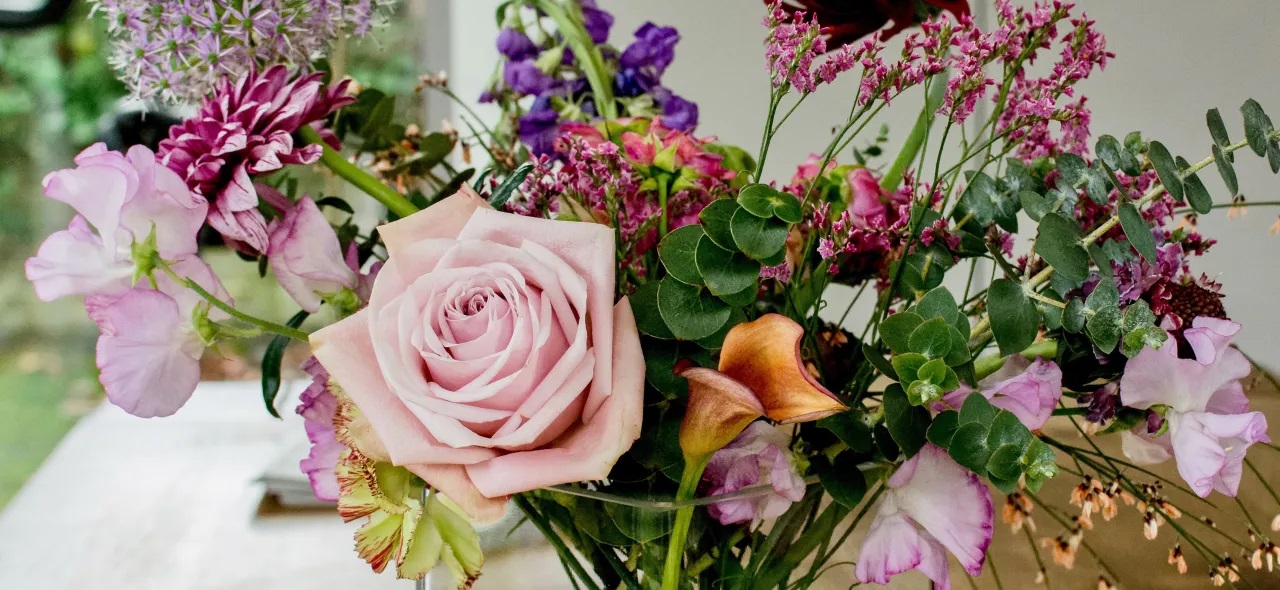
When buying flowers individually, it is important to know which plants go well with each other. It is like with guests: you invite a group of people who have something in common to a get-together. The same thing works with flora. Some of its representatives go well together, while for others, being together in a bouquet can be disastrous. To understand the issue of flower compatibility, read this article by Beauty Flowers.
To begin with, remember the rule: do not combine bulbous and woody plants. For example, tulips and roses will not be good neighbors. It is important to understand that flora helps to create the shape and mood of the bouquet. Here you can rely not only on your own preferences, but also on optimal floral combinations.
Companion flowers: the best plant combinations
We have created a selection of fairly companionable flowers so that even a beginner can successfully make a bouquet:
- It is not for nothing that the rose is called the queen of flowers. It looks noble and organic surrounded by any of its "subjects". Delicate buds add sensuality and romance to the composition.
- Chrysanthemums look luxurious, but not pretentious. If you want to minimize the romanticism of the composition, we recommend creating a flower mix by adding gerberas and sunflowers.
- Gerberas are universal plants in relation to other flowers. They can be used to decorate any composition to create bright accents or emphasize the shape of the bouquet.
- Chamomile. The laconic simplicity of flowers makes them an ideal pair for bells, anemones and eustomas.
To add splendor, you can use gypsophila or limonium. Their delicate inflorescences rhyme with most representatives of the flora, and especially chic - with delicate bush roses and hydrangea.
Flowers that rarely combine with others in a bouquet
Some of the most capricious in terms of compatibility are daffodils. After cutting, mucus is released from the stems, clogging the cuts of other flowers, and they fade faster.
Orchids, calla lilies and lilies can act as single accents. But they cannot be called too sociable. The only exception is roses and greenery. With such components, the listed flowers look great. This can be taken into account when choosing a bridal bouquet.
Now you know the main rules for combining plants. But it is also important to focus on the color spectrum and the preferences of the person for whom the composition is intended.

Очень порадовали ценами и сервисом. Сам нахожусь в Мюнхене, … Подробнее