


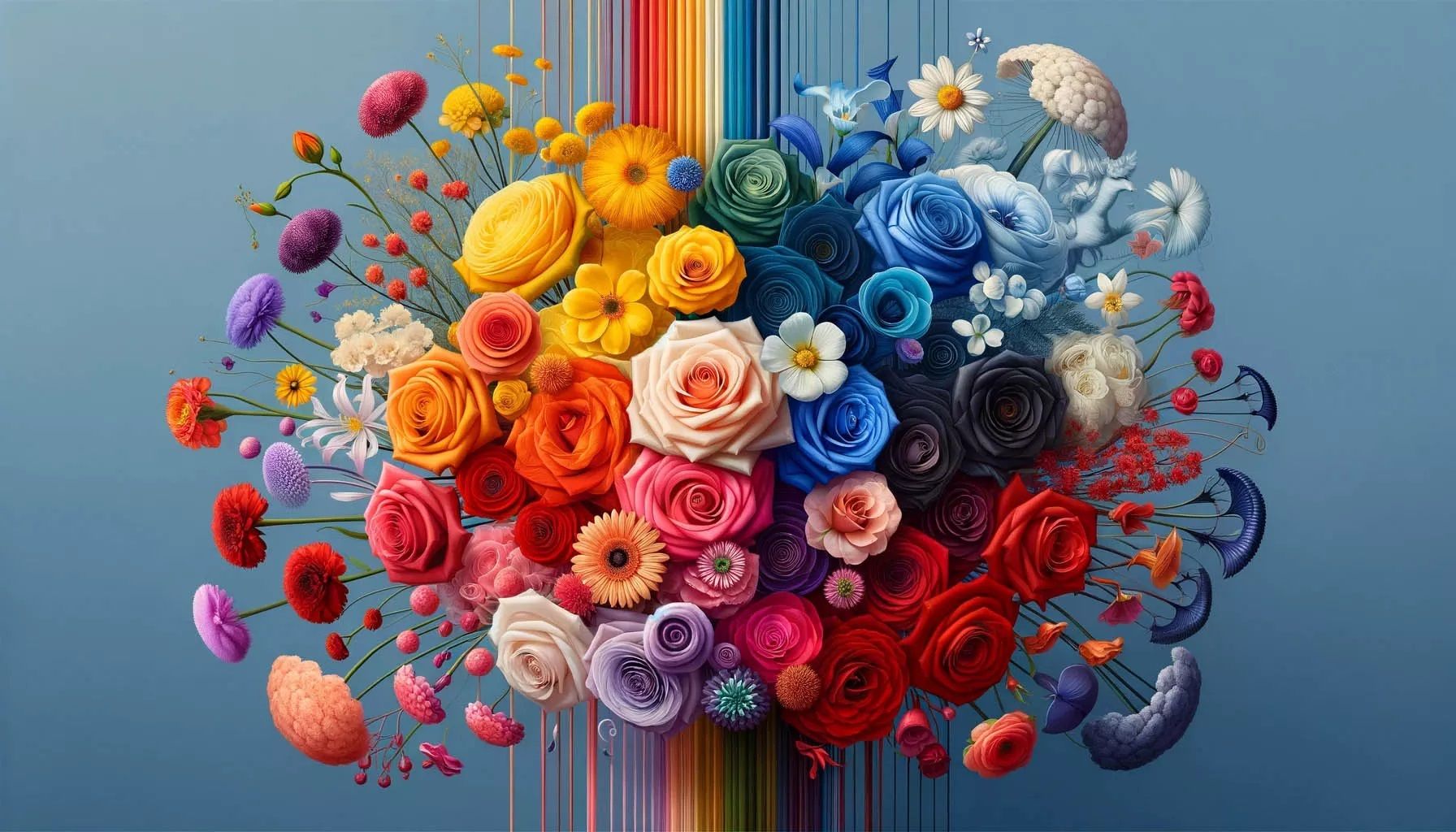
Modern science is increasingly exploring the connection between plants and the psycho-emotional state of a person. Neurobiological studies prove that interaction with flowers affects the neurotransmitters of the brain, changing mood and cognitive processes.
Psychological portraits through flowers
Scientists are developing methods that allow to determine psychotypes, predict behavioural reactions and even reveal hidden psychological traumas through flower preferences.
- Hydrangeas: indicate a tendency to deep analysis and emotional stability. Studies show that people who prefer hydrangeas have a well-developed emotional intelligence and the ability to think systematically.
- Lilies: indicate inner strength and the pursuit of excellence. Neuropsychological studios link the choice of lilies to a high level of ambition and an innate sense of self-worth.
- Irises: a marker of creativity and out-of-the-box thinking. Neural network studies confirm the link between the choice of iris and increased activity of the right hemisphere of the brain, which is responsible for creative processes.
The uniqueness of floral perception lies in individual neural patterns that are formed throughout life.
The evolutionary psychology of flower preferences
The choice of colours has deep biological roots. Evolutionary psychologists argue that our floral preferences are the result of thousands of years of adaptation to the natural environment.
Interesting scientific facts:
- Blue flowers are most trusted because of their association with clean water.
- Red hues provoke an increase in adrenaline and excitement.
- Yellow flowers stimulate serotonin production, improving mood.
Modern research has proven that flowers are able to influence biochemical processes in the body. Phytoncides and essential oils of plants directly interact with the nervous system.
Mechanisms of influence:
- Reduction of cortisol (stress hormone) levels.
- Activation of the production of endorphins.
- Improvement of cognitive function.
- Normalisation of heart rhythm.
Flowers are a complex biopsychological communication system that carries much more information than meets the eye.
They speak to us in the language of nature, which we do not yet fully understand, but continue to explore with incredible fascination and curiosity.
