


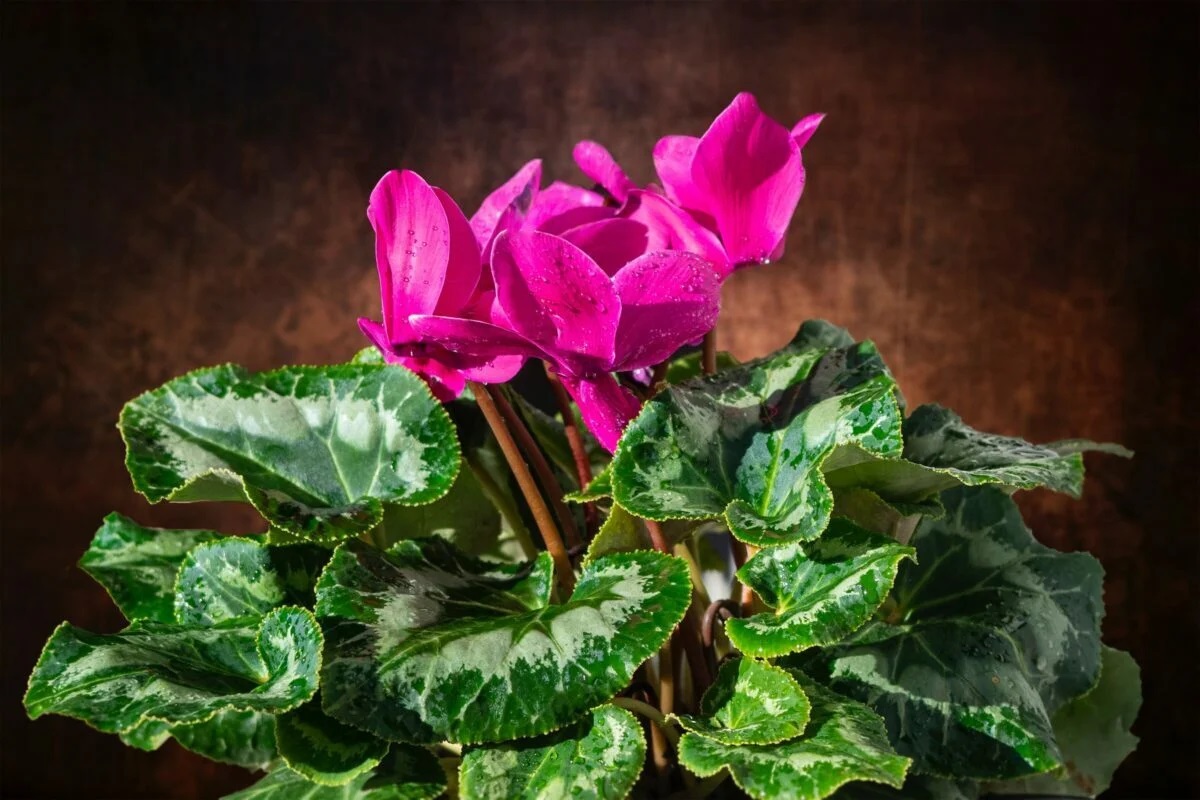
The attractive and special cyclamen blooms in the autumn-winter period. But for this it is necessary to create certain conditions and proper care for it. After all, only a healthy plant can please with its abundant flowering.
Features of caring for cyclamen
This delicate indoor flower requires special attention. Otherwise, it not only stops blooming, but can also lose its attractiveness, or even die completely.
To ensure that bright and unusual "gramophones" of cyclamen appear on your flower, follow some rules of care:
- Set a watering regime. Use settled or distilled water. It should be slightly warmer than room temperature. Make sure that the soil does not dry out, but is not over-moistened either. Avoid getting water on the tubers and buds, so as not to provoke their rotting. It is better to use watering through the tray.
- Reduce watering during the dormant period. In summer, reduce the frequency of watering, resuming it in autumn.
- Maintain optimal humidity. If the air in the room is dry, it is recommended to spray water from a spray bottle around. When buds appear, stop spraying.
- Maintain proper lighting and air temperature. It is best to place cyclamen on the east or west side. For a flowering plant, the optimal temperature is considered to be 10-14 ° C, and after flowering - no higher than 25 ° C. At this time, the flower should be moved to a shaded place.
- Disease prevention. Over-moistening of the soil can lead not only to rotting of the tubers, but also to the appearance of spider mites, which significantly weaken the flower. The appearance of small areas of yellowing after flowering is a natural process and you should not worry. At other times, this signals violations in care.
It is necessary to remove damaged leaves in time, use fungicides if necessary and strictly observe the optimal humidity and temperature. Only in this case will the cyclamen be healthy and delight you with flowering.
Top dressing and transplantation of cyclamen
It is optimal to fertilize the plant 2 times a month with complex preparations. After flowering, top dressing is not carried out.
In summer, it is better to transplant the plant into sterile soil and a small pot with good drainage. When transplanting, use the transshipment method with a lump of earth so as not to damage the roots.
In the autumn-winter period, keep the flowers away from heating devices and drafts, but periodically ventilate the room.
