


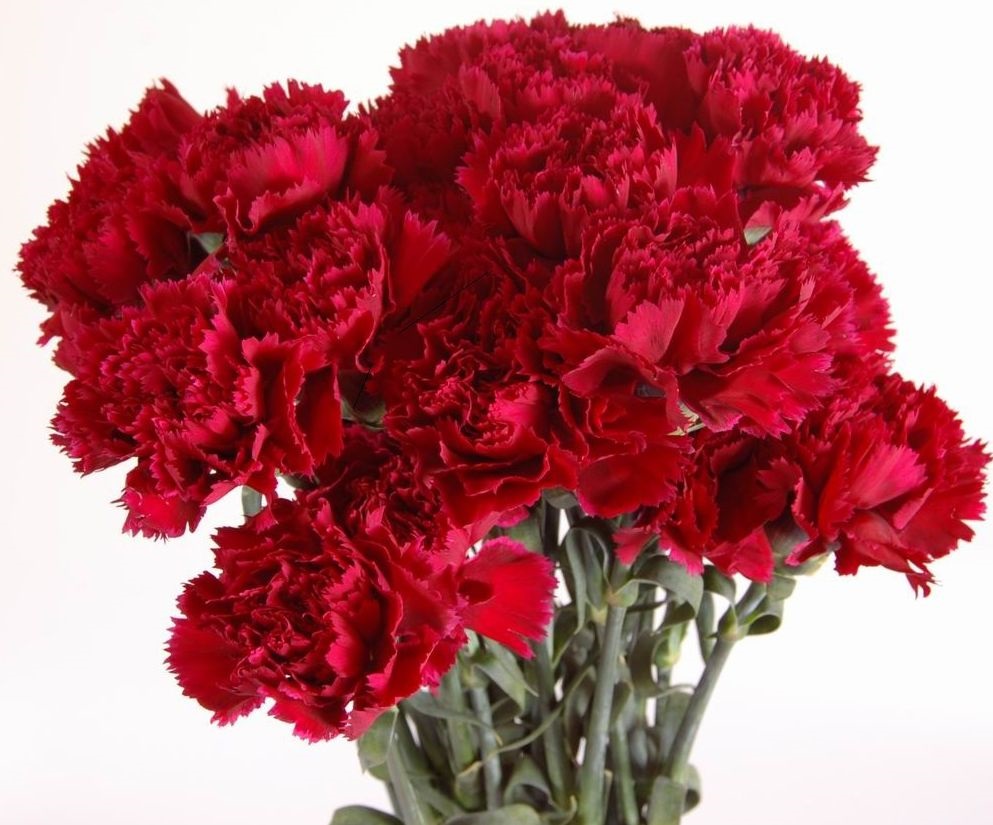
Most people associate the red carnation with funerals or memorial rites. Therefore, it has long been firmly established as a ritual flower.
Why from the symbol of love and self-sacrifice, which endowed the carnation of the ancient Greeks, in our Orthodox culture appeared the tradition to accompany the saddest events with it in their hands?
Features of funeral rites
The tradition of decorating burial places with flowers and wreaths has survived since the times of paganism. The Church tried in every possible way to eradicate this and even tried to ban such decoration of cemeteries by decree of the Holy Synod. However, Christians continued to pay tribute to the dead with flowers and wreaths.
In places with temperate and cold climate access to fresh flowers was limited by seasonality, so for mourning bouquets and wreaths used green plants and flowers that can not wilt for a long time even without water. The carnation turned out to be just such a flower - it perfectly tolerates transport and keeps its freshness for more than a day without water.
There is also an opinion that the symbolism may lie in the common root of the words ‘carnation’ and ‘nail’. After all, it was nails that were one of the instruments of execution of Jesus Christ. Another legend says that red carnations grew from the tears shed by the Virgin Mary near the cross with her crucified Son. The Catholic Church still considers them a symbol of Our Lady's sorrow and the Passion of Christ.
Mourning symbols in other countries
Different countries and cultures have their own funeral traditions and flowers that are associated with mourning.
- White calla lilies. In some European countries, these are traditionally used during mourning for royalty.
- White chrysanthemum. This is the mourning flower of the Japanese and Chinese.
- Poppies. The symbol of Morpheus, the god of sleep, and Thanatos, the god of death, is used in Greece to decorate graves.
- White lilies and roses. In North America and some European countries, these flowers symbolise the soul's passage to a better place.
- White or yellow lilies, chrysanthemums and lotuses. Buddhists only decorate the table with a photograph of the deceased and prefer a modest farewell.
Indeed, carnation is often used in mourning events, however, do not endow it only with ritual symbolism. It is wonderfully suitable for large anniversary bouquets, for congratulating men, as an element of phyto-compositions and in other cases. This flower is versatile, beautiful and quite persistent, so do not be afraid to choose carnation for any bouquets.
